
Healing and Reclaiming Your Life After Relationship Abuse & Trauma
Leaving a harmful relationship does not always mean the trauma ends. For many survivors of family scapegoating, narcissistic abuse, or chronically invalidating relationships, the real healing work begins after the abuse has stopped. Confusion, self-doubt, grief, and hypervigilance can linger long after the relationship itself has ended.
If you are navigating the aftermath of relationship abuse or trauma, you may find yourself asking questions such as:
- Why do I still feel so shaken by what happened?
- Why do I keep replaying conversations in my mind?
- Why do I sometimes miss the person who hurt me?
- Why is it so hard to trust myself again?
These responses are not signs of weakness or failure. They are common and understandable reactions to prolonged emotional stress and psychological harm.
Healing is possible. It begins with understanding what you experienced and how it has affected you — often more deeply than you may realize
Understanding the Impact of Relationship Trauma
Relationship trauma can take many forms. It may involve chronic criticism, gaslighting, scapegoating, manipulation, emotional neglect, or repeated boundary violations. Over time, these experiences can undermine your sense of safety, identity, and trust in your own perceptions.
When someone is repeatedly told that their feelings are wrong, their memory is unreliable, or their needs are unreasonable, the nervous system adapts in order to survive the environment. Survivors often develop patterns such as:
- Hypervigilance and anxiety
- Difficulty trusting their own judgment
- People-pleasing or over-accommodating others
- Persistent self-blame
- Emotional exhaustion
These patterns were not character flaws. They were survival strategies.
The challenge after leaving such relationships is learning how to gently release those strategies and rebuild a sense of internal stability.
Why Healing Takes Time
One of the most frustrating aspects of recovering from relationship trauma is how long the healing process can take. Many people expect that once the relationship ends, their distress should quickly fade. Instead, they may experience waves of grief, anger, confusion, or longing.
This is a normal part of trauma recovery.
Our minds naturally try to make sense of painful experiences. Survivors often spend months or even years trying to understand what happened and why it affected them so deeply. During this time, it is common to revisit memories, question past decisions, and struggle with unresolved emotions.
Rather than rushing this process, it can be helpful to approach healing with patience and compassion. Recovery involves rebuilding several core areas of well-being:
- Emotional safety
- Self-trust
- Identity and self-worth
- Healthy boundaries
Each of these areas develops gradually as survivors gain clarity and reconnect with themselves.
Reclaiming Your Identity
One of the most profound losses in harmful relationships is the erosion of identity. When someone has been criticized, controlled, or dismissed repeatedly, they may begin to lose touch with their own preferences, beliefs, and instincts.
Part of healing involves rediscovering who you are outside the influence of that relationship.
This can include:
- Reconnecting with personal values
- Exploring interests that were discouraged or minimized
- Learning to listen to your own intuition again
- Allowing yourself to have needs and boundaries
This process can feel unfamiliar at first, but it is an important step toward reclaiming your autonomy and emotional independence.
Rebuilding Self-Trust
Gaslighting and chronic invalidation can make survivors question their perceptions. Many people emerge from these relationships feeling uncertain about their own judgment.
Rebuilding self-trust takes time, but it begins with small steps:
- Acknowledging your feelings without dismissing them
- Recognizing when your instincts were correct in the past
- Practicing self-validation rather than waiting for others to approve your experiences
The more you practice honoring your internal signals, the more confidence you will regain in your ability to navigate relationships and life decisions.
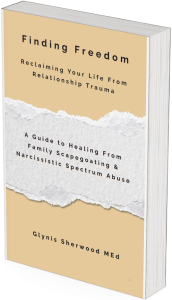
Many survivors ask how they can begin rebuilding stability and self-trust after leaving harmful relationships. I explore these recovery steps in greater depth in my book Finding Freedom, which outlines a trauma-informed approach to healing from chronic relationship trauma.
Learning Healthier Boundaries
Another essential aspect of healing is developing clearer boundaries. Survivors often learned to suppress their needs in order to avoid conflict or maintain the relationship.
Boundaries are not about controlling others. They are about protecting your emotional well-being and communicating what is acceptable in your life.
Healthy boundaries may include:
- Saying no without excessive explanation
- Limiting contact with people who invalidate or manipulate you
- Prioritizing your own emotional safety
- Recognizing that your needs and feelings matter
These skills often develop gradually through reflection, practice, and supportive guidance.
Moving Toward Emotional Freedom
Healing from relationship trauma is not about erasing the past. It is about freeing yourself from its ongoing influence.
As recovery unfolds, many survivors notice meaningful changes:
- Greater emotional stability
- Reduced rumination about the past
- Stronger self-respect
- Increased clarity in relationships
- A renewed sense of inner calm
These shifts do not happen overnight. But with the right understanding and compassionate support, they are absolutely possible.
 When Therapy or Coaching Isn’t Accessible
Many survivors of relationship trauma would benefit from therapy or coaching, but access is not always possible. Financial constraints, long waitlists, geographic barriers, or personal circumstances can make it difficult to receive consistent professional support.
During these times, having a reliable source of guidance can make an important difference.
A thoughtfully designed self-help resource can provide structure, language, and reassurance when you are navigating the healing process on your own. Reading about trauma responses, manipulation dynamics, and recovery strategies can help survivors make sense of their experiences and reduce the isolation that often follows harmful relationships.
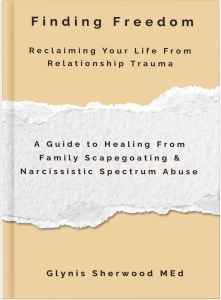
Finding Freedom was written with this reality in mind. The book offers trauma-informed explanations, reflection prompts, and practical insights that readers can return to whenever they need grounding or clarity.
Many people find it helpful to read a small section at a time, reflect on the ideas presented, and use the material as a daily or weekly support for their healing journey. While it cannot replace individualized care, it can serve as a steady companion while you rebuild safety, understanding, and self-trust.
A Guide for the Healing Journey
Because so many survivors struggle with the lingering effects of relationship trauma, I wrote Finding Freedom: A Guide to Reclaiming Your Life After Relationship Trauma.
The book offers a trauma-informed framework to help readers:
- Understand how harmful relationship dynamics affect the mind and nervous system
- Release patterns of self-blame
- Restore self-trust and emotional balance
- Rebuild identity and healthy boundaries
Healing is rarely a straight line, and no book can replace the importance of personal support and care. But the right guidance can provide clarity and reassurance along the way.
If you are walking this path, know that recovery is possible. With patience, self-compassion, and the right tools, it is possible to move from surviving toward a life defined by greater freedom, stability, and self-respect.
Your story does not end with the trauma you endured. It continues with the strength and healing you are now building.
If you would like guidance and support along the way, Finding Freedom: A Guide to Reclaiming Your Life After Relationship Trauma offers practical tools and compassionate insight to help you move forward with greater clarity and self-trust.
Learn more about the Finding Freedom eBook here
Psychotherapy and Coaching is available by Video around the world.
Glynis Sherwood – MEd Counseling Psychology, specializes in recovery from Family Scapegoating, Narcissistic and Cluster B Abuse, False Shame and Guilt, Traumatic Stress, Estrangement Grief and Relationship Challenges.