

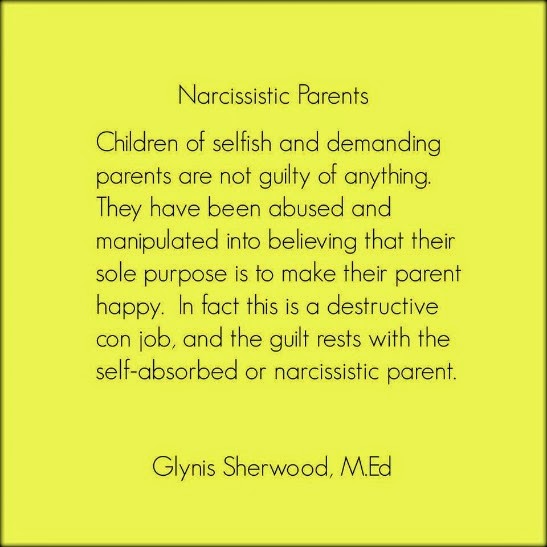
Narcissism is a set of unhealthy personality traits that exist on a continuum from excessive self-absorption to a ‘hard-wired’ personality disorder. Narcissism is characterized by:
1/ Extreme self-centeredness/self-obsession, that shows up as the relentless pursuit of personal gratification and attention seeking, social dominance and cold-blooded ambition.
2/ The inability to take responsibility for one’s behavior or keep commitments, while being dependent on others to meet his/her responsibilities – in essence, being functionally impaired.
3/ Lack of empathy, as well as the need to be right, perfect and admired at all times.
4/ Feeling entitled to special treatment, regardless of circumstances or accomplishments.
At its core, narcissism is a defense against deep-seated low self-worth that is pushed out of the conscious mind of the narcissist. This rigid kind of personality structure tends to develop in response to childhood neglect, abuse or trauma, where emotional needs are unmet or denied. If the narcissist’s wants and needs – real or imagined – are not met in adulthood, s/he is prone to fly into rages and ‘defend’ her/his low self-esteem through blaming or attacking others. S/he is usually not consciously aware of this process, as the defense of blaming others is much more developed – meaning rationalized – than any insight regarding the appropriateness of their behavior, or the potential for taking responsibility for themselves. Most narcissists have an underlying belief that they are helpless to make themselves better, and are stuck in a perpetual victim stance where they see themselves as innocent bystanders in a world that continues to do them wrong. Some forms of narcissism are overt, where the individual behaves in a grandiose, superficially charming and entitled manner. Other narcissist are more covert, and present as falsely humble victims of a cruel world that has not given them their due. However, both types of narcissists can respond with rage and malice if their expectations of attention, admiration, pity, or being treated as special are not met by others.
You may recognize one or more family members in these profiles of overt and covert narcissists. Regardless, if the narcissistic family member is in a dominant position, as with a parent, then that behavior profoundly influences the tone of the family. A narcissistic parent may be partnered with an individual with codependency problems. A codependent parent fixates on trying to manage, enable or accommodate the narcissistic parent in order to gain a sense of purpose, worth, and control.
If you grew up in a narcissistic family system, you probably felt unsupported, neglected or abandoned. You were likely told – directly or indirectly – that you had to put your narcissistic family member’s needs first, or got accused of being ‘selfish’, and punished or ostracized if you didn’t. Your narcissistic parent may have had a substance abuse problem or other addictive habits. If you did not go along with the narcissist’s agenda you were likely criticized, blamed or shamed. In other words, you were scapegoated. The family Scapegoat is often the family member who is non-compliant with mistreatment, the whistle blower, expresses displeasure or advocates for their own needs, and is then demonized as the family problem, thereby establishing a ‘false narrative’ of victim blaming.
Narcissistic Family Member Traits – Experience and Impact on the Scapegoat:
- You are not allowed to be yourself – to have your own needs, personality, and independence. You are scapegoated and labeled as self-centered and possibly “narcissistic” for having your own wishes and interests and face punishment and /or shunning if you pursue them.
- You experience a lack of real empathy, though it may be feigned. Even if you are empathic towards family, you are accused of being uncaring for not putting others – especially the narcissistic family member – first.
- Family members may align with the narcissist, who is viewed as either the legitimate power broker or a tyrant to be appeased. These narcissist supporters can be the other parent, siblings, their children or even extended family. Lies are perpetrated to encourage family to side against you as the family scapegoat.
- You are expected to act as a parent to your parent(s), rather than having your parent(s) care for you. You lose love, approval, privileges, etc. if you can’t, won’t or don’t.
- Poor and inappropriate family boundaries are the norm – e.g. intrusiveness, mistreatment, abuse is normalized or sanctioned, disrespect, negligence of health and/or safety, externalization of the problem onto those who point it out.
- Ongoing scapegoating, criticism, attacks, blaming, shaming or shunning are used as a threat or weapon by the narcissist and their allies, especially if they don’t get their way.
- Pressure is placed on you to make the narcissistic family members look good to outsiders. Rejection or abandonment results if you do not. Outsiders are treated as more important than family. Meanwhile, your accomplishments are ignored, minimized or even criticized, unless your talents make the narcissistic family member(s) look good.
In other words, in a complete reversal of reality, you are accused of and punished for other people’s narcissistic expectations, demands and behavior. Projection is the name for this kind of behavior, which in itself is a cornerstone classic narcissistic defense.
Psychological Harms To the Scapegoat That Linger From Narcissistic Abuse:
- Doubting your self-worth. Believing you are ‘bad’ or defective. Buying into negative feedback from family.
- Having an overwhelming need for external validation.
- Feeling constantly anxious, overwhelmed or confused not knowing what your family wants from you, or how to please them.
- Believing you have to make the narcissist happy to prove you are lovable and not ‘bad’ or the problem.
- Difficulty making and keeping relationships. Choosing narcissistic partners or friends.
- Fear of abandonment and imposter syndrome should others discover how ‘flawed’ you really are.
Why Do Family Members Align With the Narcissist?
- The narcissist appears to have power. They call the shots, command attention, control decision making and extract compliance from others. They are defective ‘alpha dogs’. Those who go along with this power grab hope to share in the power – or at least not be targeted for abuse.
- Fear of facing ‘the awful truth’ about family or oneself, and having to do something about it, leads to minimizing or denying the existence of the problem. Faced with the potential of being attacked and rejected, and the general upheaval that can stem from taking responsibility for admitting the truth, many narcissist supporters will choose to ‘look the other way’, at tremendous cost to themselves and the family unit.
Why You as Scapegoat Need to Recognize the Problem To Begin Narcissistic Recovery
In short, your psychological well being depends on it! Family relations are at best strained and, at worst, broken down in narcissistic family systems. There is a pattern of entrenched negativity that has been going on for years or decades that never seems to improve and wears you down emotionally. The truth is that things likely will not get better, as narcissistic people lack the empathy and insight that would motivate them to change their attitude and behavior for the sake of their relationships. Their supporters lack the will or courage to think for themselves, or they believe they benefit from this arrangement and will not challenge it. This extracts a heavy psychological toll on healthier family member(s) like you – the Scapegoat – who attempt to function within and possibly ‘improve’ toxic family dynamics. In spite of good intentions, this is almost always a set up for failure!
In fact, the most likely outcome is that you will continue to be caught up in a vicious cycle trying to appease the narcissist and walking on eggshells or confronting their self-centered behavior, leading to repeated angry outbursts, hostility, shunning, blaming and shaming reactions from the narcissist and his/ her supporters. You may be subjected to escalating family scapegoating from narcissistic family members and their allies. What’s worse, is you may have been conditioned to blame yourself for the problem too, which is a kind of brainwashing known as Stockholm Syndrome.
How to Protect Yourself
The Big Picture of Recovery from Narcissistic Abuse
- Understand that someone who has a history of entrenched narcissistic behavior is not going to change, and you can’t help him/her to heal or become a better person. You simply don’t have that kind of power! There are long term therapies that can help narcissistic family members, but few attempt this as they are unable to acknowledge that they have a problem, never mind do something about it unless something huge is at stake. For example, their spouse threatens to leave them or they are disciplined at work. Even under those terms, it is difficult for narcissistic people to accept that they have caused or contributed to problems with others, as they see themselves as victims.
- Hold onto reality – that the narcissistic family member won’t let you have a meaningful, love-based relationship as they simply don’t know how, and can’t see the value of it to themselves. It’s all about maintaining power, and love has no role to play in that equation. They don’t care about you, not because you aren’t valuable, but because they don’t know how, being completely self centered. In that way, narcissistic behavior is not personal, but a reflection of something missing in the narcissist. It feels very bad, however, to be on the receiving end of this abuse or neglect, especially for children of narcissistic parents who never received the love and nurturance required for healthy human development.
- Stop expecting the narcissist to become reasonable or caring – if only you can get through to him/her. It’s not your job to ‘fix’ them, and it’s completely futile as well. Go Low Contact to preserve your peace of mind and minimize harm to yourself.
- Realize you are not responsible for the narcissistic person’s abusive or negligent actions, no matter how much they try to blame you or claim victimhood. Choosing to exercise self-control and not act abusively is a fundamental adult responsibility.
Scapegoat Survival Strategies
- Stop disclosing any personal information that the narcissist can use against you. This includes how you feel, what’s going on in your relationships or your job, or anything you are struggling with that makes you feel vulnerable and in need of support. Do not ask for help or offer to be a rescuer.
- Keep the conversation superficial. Avoid power based emotional subjects, such as naming the problem or discussing appropriate family behavior.
- Distance from negative family interactions by deciding to go to minimal or No Contact. Set ground rules with your self about what you are willing – and not willing – to tolerate regarding behavior from other family members. Set limits on how much time you are willing to invest with family.
- Connect with allies in your extended family, if any. Test the waters by taking low-risk steps to establish trustworthiness. For example, inviting them for coffee, keeping the conversation light, and seeing if they appear to be caring and interested in you.
- Consider getting counseling from a therapist who specializes in family abuse and scapegoating for family scapegoating advice. If you are the adult child of a narcissistic parent(s) you have been deprived of essential parental support and appropriate guidance. If you are questioning your self worth, have a hard time bonding with others, are vulnerable to falling into negative relationships (repeating the original trauma), or prone to self destructive behavior, seek counseling to help build your sense of self-worth, overcome the hurt and become the person you are meant to be – a person of worth who deserves peace of mind and fulfillment.
References
Empathy Deficits in Siblings of Severely Scapegoated Children: A Conceptual Model Jane Hollingsworth, Joanne Glass & Kurt W. Heisler, Journal of Emotional Abuse, October 2008
Scapegoating in Families: Intergenerational patterns of physical and emotional abuse, Dr Vimala Pillari, Philadelphia, PA, US: Brunner/Mazel, 1991
Child Abuse: Pathological Syndrome of Family Interaction, Arthur Green, Richard Gaines and Alice Sandgrund, The American Journal of Psychiatry, 2015
Like this Article? Read more Scapegoating articles here
Need help overcoming Family Scapegoating? Check out my Family Scapegoat Counseling page
Counseling is available by Video worldwide.
Glynis Sherwood – MEd, Canadian Certified Counselor, Registered Clinical Counselor, specializes in recovery from Family Scapegoating, Narcissistic Abuse, Low Self Esteem, Chronic Anxiety, Estrangement Grief and Addictive Behaviors.
I really got a lot out of this article. My husband and I have both dealt with Narcissism. For me it was my dad and for my husband it’s his mother. We have our full share of if from both sides of the family. I broke ties with my family two years ago. It’s not easy but emotionally it was something I had to do. I don’t regret it.
As for my husband’s mother she is a classic narcissist mother. I always thought my husband worrying about his mother and putting her needs before his were strange. She was always on our shirt tales early in our marriage. If I got something new she had to go out and buy the same thing. I thought it was odd. Now I know she has no identity for herself or self love. More than likely I think she was abused as a child. I wish I would have known about this 20 years ago. Had I known my husband not standing up to her from the beginning would still be a problem today 20 years later. I would have given up trying to have a normal loving relationship with my mother in law back then. I always thought it was me and I needed to keep working at it.
Until my sister in law came along and my mother in law has no problems having a relationship with her or the grand kids. My mother in law brags how much time she spends with those kids, how she’ll babysit for hours. When we asked her to watch our kids she always had an excuse. One time we had her watch our son who was 5 at the time she accused him of masturbating. We NEVER asked her again. Something is wrong with her mind. My daughter even sees the favoritism towards the other grandchildren. She tells me grandma isn’t a grandma. My sister in law married the Golden Child.
Most recently I have come to terms with not having what you stated in the article about a love based meaningful relationship. I think it hurts me more than my husband. He’s use to the disrespect she dishes out. It’s easier for him not to rock the boat and just go along. Also because I am a mother of two I couldn’t understand how she could be that way. Now I do. I am tired of going along with everything she wants for holidays, family functions and visits.
In the 20 years we have been married my husband could not deviate away from what she thought was right in her mind, it wasn’t okay for him to think different than her. If he were to stand up to her, he’d have hell to pay with the silent treatment or being treated disrespectfully. One time I tried to call her out on her behavior and she acted like she didn’t know what I was talking about and changed the subject. She’s a very manipulative, covert women and thinks she has her family fooled. I told my husband when she dies she has no legacy to leave behind to continue. Thankfully! Good riddance! One of the best things we did was move away seven years ago. Now she can concentrate her dysfunction on the Golden Child and his wife and family. Those two wouldn’t say a negative thing about her if their lives depended on it. They are all so dependent on each other and fooling each other. They made my husband’s brother and wife into enabler’s and gave them both a sense of entitlement. It’s so messed up!
Sounds like you have set the limits you need to Betsey, and the good news is that you feel better and have few regrets.
Glynis,
Thank you for the insight. My two oldest children, have a dad very much like the narcissistic personality described in the article. It was chilling reading these things and recognizing so many traits of his. Prior to reading the article, I felt like maybe I was being overly critical of him. He is my ex, and I think sometimes it is easy to fall into the trap of thinking negative things about your ex, regardless of your current relationship with them. One of our children is now an adult and she still struggles to gain her dads approval and love. I forwarded her your article in hopes that she can better understand how to handle it to her benefit.
Thank you so much,
brenda
Thanks Brenda for your positive feedback. Glad the article was helpful to you and hope it helps your daughter too! 🙂
You’ve been through a doubly tough time with your family and child’s father. Sounds like you are not only smart but determined to have the life you and your child deserve. Yes, minimizing contact can be lonely – especially in the beginning. I hope you can find the love and support you need as you break free from abusive family dynamics. Many people find it easier to connect with the ‘right’ people once abusers are out of their life.
Great article. A relief to read that someone gets it. I’m trying to figure out if I should go no contact with a beloved baby sister and niece. I suspect (based on a slip of something she said) that she is going back to my narcissistic mother and telling her things I told her, my little sister in private. Also, I recently texted lil sis about my hospital stay where I had to get mri and xray and she said nothing (silence crickets). No concern for me no asking about why I was in the hospital, no curiosity. If an acquaintance not to mention a sibling said they were in the hospital, I would be curious as to why and sensitive enough to express concern.
My life has such high points away from family of origin but such low ones (and I mean down in the gutter low) when dealing with family. Extreme negativity and tearing people down as if they have no other context for relating. Maybe they don’t. I’ve begged my narcissistic mother for decades for information about my birth father and these are the responses I got “I may tell you and I may not” (when I was a teen), “Don’t ask me again,” (throughout adult life), and then she said his name is James, 5 years later she said his name is Fred. I hate my mother. I’m sorry to write it but shes just proven to be such a wicked hearted cold and uncaring person who could give a dam if I lived or died. I don’t always feel this way because it’s like she has, once in a while, shown a different side of herself like every 10 years but for the most part it is really bad. Also, I’m not sure what to do about my own identity as I’ve 3 other siblings and my mother has different names on the birth certificates (all of us siblings have same last names but my mother listed her last name differently on various birth certificates). I feel like I don’t know who this person is. Sometimes I feel like dying the pain and grief hurt so bad. Narcissistic mother was a violent mean woman. Somehow, I’m the scapegoat, the “truth teller,” the successful one in this twisted family with me being the first to graduate college, live on my own, once successful business (I had such a hard time accepting my talent and sabotaged myself) but overall it’s a torturous helish existence.
I feel that most people blame you in some way if you are low to no contact with your family. They don’t understand that visiting a narcissistic parent is like visiting someone who has raped and abused you who also just happens to have the title mother or father. Sometimes I’ve kept low contact just to not appear weird. Anyways, I digress.
Need therapy and was just researching why I have been sorrowful, grief stricken, and deeply sad for most of my teen and adult life.
Thanks for your positive feedback on my article Nalani. Sounds like you are understandably in pain regarding your family. It also sounds like you have a good head on your shoulders and understand the family dynamics, and want to take steps to protect yourself further. It can be a challenging decision whether to go No Contact. You mention needing therapy, and I want to let you know that if you are interested in working by Skype video, you are welcome to contact me via the Request an Appointment button at the top right of this page. In the meantime, wishing you all the best on your healing journey.
I’m recently in the process of getting a divorce from my wife who has been raised by parents who Im sure have been scapegoating their whole family. This article is exactly what I have been dealing with for the past 8 years by the mother in law and my wife. They blame me saying I had a bipolar disorder and told me basically the problem was me and the reason for divorce. And I’ve been to the doctor had blood work done and analyses just because I started thinking maybe it was and after negative results and the doctor telling me I was clinically depressed. I realized maybe it’s not. So I started just sitting back and watching how things went in family get together. In this family of 6 siblings there are 2 other scapegoats I noticed one is a older sister of my wife and the youngest brother. Both are those who speak their minds. The thing is I’m a strong minded person as well and speak when I see something isn’t right or when mother in law is stepping on my toes about parenting my two kids me and my wife have together. I always said something assuring I knew what I was doing and that’s something she didn’t take well. It’s crazy how now we have been separated she’s living with her mom of course and I’m in our home, it’s like im divorcing both of them. Still being blamed by both. But I don’t feel depressed or not motivated to do anything I feel happy now her not here trying to control everything I do. The only problem is now she’s trying to hold my kids from seeing me every chance she can and I had to spend 4K on a retainer fee for lawyer not to mention I’m unemployed (due to down turn in oilfield) in order to see them which was placed by rule 11 agreement from a judge and they got mad about that. For the past month she’s been trying to find something on me to prove I’m a bad dad going through my phone bill calling numbers searching for I guess a female but I’ve got nothing to hide. And even though I’ve worked and provided, stayed faithful, and made sure my kids were loved and knew it. She still blaming me because she has to be right even when she’s wrong. I just feel sorry for KB and CC (sibilings) Just please say a prayer for me and them that all come out well because it been a bad year And I don’t know what is going to happen. But I’ll stay positive
Thank you for persisting in educating and connecting with people like myself, that really apprecite validation and support. I divorced a clever, sussessful narcissist after a fourteen year relationship and (almost) ten year marriage. I have three children with him. The common answer to go “no contact” would be a “no brained” if it was possible. Divorcing a narcissist has taken me years of devouring any educational info and experiences out there to even get to the point where I can see what I experienced… let alone believe it to be true… resources for parents who have “escaped” yet have to leave the children to still experience the narcissist’s reality is difficult to find. The aftermath of the “escape” is truncuated by the reality of the limitations of the system.. which for me was retraumatizing, creating helplessness and reinforcing the abuse of a narcissist for both the children and the parent. Try explaining to your children why their abuse is not recognized. Their experience is invisible as is mine, except to each other… we see the terrifying monster void of empathy and full of self serving adgenda at all costs. Any human deserves validation and judicial validation from this abuse… what can I do to help others and my family create power and education in a system based on getting through the pile of cases?
Danielle – Your persistence and courage to protect your children and do the right thing shines through all that you are sharing. Sounds like a very trying ordeal for you dealing with a system that doesn’t recognize narcissistic abuse nor do a good job protecting victims. If you would like – and have time – to write up some points or guidelines for others dealing with similar difficulties with the judicial system, I could post them on my blog.
Glib – Sounds like you went No Contact to protect yourself from getting bashed further by your first family. It is normal – though certainly not easy – to expect blow back. By pulling back you are making a statement that something is wrong with these relationships. In essence, you are dis-identifying with the problem. Going No Contact is a very personal choice that you don’t have to explain to people who don’t wish to listen. However, it makes them angry that you won’t allow them to continue to bully you as it puts the spotlight on their problematic behavior. I certainly believe it’s your right to decide who – including children – you wish to be in contact with. It doesn’t sound like you want to reward bad behavior. Is remaining in contact with your mom, who by your accounts is the ring leader, a good idea for you or making things worse for you? Best of luck as you sort through these tough questions.
Thank you for your support.
Sure thing 🙂
Producer – Glad my article has been so helpful to you, and you now have a framework to help you better understand your experience and protect yourself.
This article is spot on and explains a lot to help me understand the dynamics of my family!
Thank you. I needed that:) I have a narcissist mother and 2 sisters. I was emotionally and physically abused and scapegoated growing up and still to this day! I am in my mid 40’s and still struggle at times with my self worth and not taking it personally. I am not the only one they do it to, they do it to others as well but being an empath, very sensitive and their daughter and sister I allow it to trigger me at times. It sucks, but I am still learning it’s NOT ME. I have no contact as of recently and know that was the right move!
Melissa – Thank you! Sounds like you are taking the right steps as you come to understand projection and protect your own boundaries – and psychological well being – more
I am the 65 year old son of a narcissistic mother who recently died. My mother threw me out of the family home when I was 20, because my girlfriend (been my lovely wife for 41 years since) came to live with me whilst I was at University. I was mortified at the time and attempted to make peace with my mother (father simply remained passive in the background) but she belittled everything that I wrote to her. Just before I graduated (as a dentist) 3 years later, my mother wanted to make her peace so she could bask in my reflected glory and gain some kudos amongst her friends and wider family. My wife thought that we should forgive her, but I could never trust my mother again and kept her emotionally at arms length thereafter although she was allowed back into our lives.
Without explaining any details, I now wish that I had never let my mother back into my life because she has proven that she was evil to the core right up until her death. Fortunately for me, in analysing my circumstances and the situation at the time my mother threw me out, I did a LOT of soul-searching and leaned to cope with the situation and this gave me the inner strength to become extremely self-reliant. I was determined from then on, that at no point in my life would I ever seek help or support from my parents, and that has been the case throughout my life and I have been a very successful adult with 2 successful grown-up daughters.
It’s often said that leopards don’t change their spots, and it’s exactly the same with human personalities and behaviour types. So my advice to anyone much younger than me who finds themselves embroiled in toxic relationships with family members is to put plenty of distance (emotional or spatial) between yourself and those who seek to spoil your life. Learn to love yourself and focus all your energy on your own life and those who love you back. Simply do not waste any time or effort on attempting to alter the family dynamic because once the pattern is set whilst you were a small child, it will NEVER change because your parents always consider you as a child no matter what your age. If your parents can’t offer you unconditional love whilst they raise you as a small child, there’s absolutely no way they’ll provide that love once you are capable of looking after yourself. Just flee the nest for your own sanity.
I need help with this. My family has done such horrible things to me in my 20’s, i wasn’t able to escape the situation im in. I live in a place they own- so they feel they can keep abusing me when they want. They are sadistic and sick people and take all their crap out on me. I’m in my late 30’s now and still stuck in this place..i dont live with them but they still abuse me b/c they own this place…
First step, get out of where you live. That’s part of their control. You can find a new place and you need to make the right sacrifices. By that I mean, move to a place that is cheaper, but free from them or take a job that isn’t ideal so you can support yourself. It can be done. I’ve been there and escaped it. I had several years of barely getting by, but now things are looking better.
Hi Glynis,
Thanks so much for your reply and your excellent articles.
One of the things that has confused me over the years, is that my mother and especially my sister can be lovely and charming a good deal of the time. My sister and her husband are the “golden couple” who socialize a lot and are well liked. But cross them and look out. They treat my brother in law’s mother and 2 siblings horribly the way they treat me. (But not my mother). They were mean to my father before he died.
Are there degrees of scapegoating, narcissism and personality disorders?
How is it that people like my sister and her family have what appears to be a fairly normal happy life while treating me the way they do. It is partially what has me 2nd guessing myself.
I am wondering if you have written articles on this topic?
So appreciate your very helpful articles.
Thanks so much.
Diane – Thank you for your positive feedback! All the best to you.
Thanks for this wonderful article! It describes problems I had with my family to a tee! https://mawrgorshin.com/2017/02/27/a-narcissists-flying-monkeys/
Mawr – You are welcome. And thanks for the link to your fantastic post on Flying Monkeys (aka the Narcissist’s hand maidens).
I get questioned about my mother all the time since she has moved and downsized. She was very popular where she lived and people are always asking me “How’s your mom?” “What’s your mom doing these days?” “We miss your mom at church. Is she okay?” What these people don’t realize is that while Mom needed their admiration, she, in return, talked about them like dogs. She was the classic narcissist and a master at manipulating people. She made herself needed at every organization she ever belonged to. She also sat on the board for a local children’s organization. I always wondered what they’d say if they knew how badly she physically abused me and my siblings when we were children.
Thank you for this article.
I still feel terrible guilt for going NC with my family. To be honest, it was just supposed to be my NM, who has always ignored me/treated me like dirt, but who’d occasionally throw money at me, and then tell everyone about it & hold it over my head. What a generous mother, what an ungrateful daughter – this was her go-to mantra.
But she’d never tell people how she’d tell me she loved me less than my GC brother.
Anyway, I don’t care about going NC with her, but my enabling father and my GC financially-dependant & emotionally stunted brother, always take her side; this is what makes me so angry, I can’t seem to get over it.
Part of me feels that THEY KNOW, so how can they treat me like this. How can they chose the ‘wrong’ side, and have no empathy for me? I guess I will never accept it, and just have to learn how to live with it.
My GC brother, impregnated a girl, he hardly knew, 5 months after I gave birth to the first grandchild, I believe he couldn’t stand all the attention my child was getting from NM. Luckily for him, his baby mama is a lovely girl, and (I think, at least on the outside) my NM treats his baby mama way better than she treated me. Surprisingly so, since this girl is nothing she ever wanted in a daughter in law: different religion, different upbringing, tattoos, and not at all what she wished for for her GC, but losing him would kill her, so I suppose she has to play nice. Part of my wonders though, how long she can keep uo the charade. She’s a horrible actress with very little patience. How long will it take for this girl to realise what my NM is like, and why I went NC? And then, will my brother chose the mother of his child or my NM, who supports them financially?
It boggles my mind.
NC has been freeing, but it’s also soul crushing, you’d never think it’ll happen to you. I come from a culture where this is not acceptable. But I had no choice, esp since I realised my GC brother’s child was going to be treated differently than mine.
The only pleasure I get from going NC, is knowing that my NM suffers way more than I do (the petty vengeful bitter scapegoat in me enjoys this actually, I’m not proud)
In her shallow ‘everybody look at my perfect life’ world, having a daughter who doesn’t want to have anything to do with her, must torture her, even though she’d never admit it.
Dudette – Going No Contact is the scapegoat’s option of last resorts, a decision you have been driven to, not out of willing choice, but to defend yourself from further abuse. It is extremely hard to take this step because, as you say, you have to confront the loss of family, including the family you never had, and deal with stigma. This is an act of courage and self respect. In time, I hope you will begin to experience the peace of mind that comes from caring for yourself enough to really protect yourself.
Thank you so very much for your reply. Thinking of myself as courageous, actually helps.
Especially since I also rejected my parent’s money and/or any inheritance that should come in the future, since they are quite well off. Something my brother would never do.
Thanks again Glynis.
Dudette – You are most welcome. Hang in there 🙂
It’s good to know I’m not alone. All the best.
My narc mother n family destroyed my adult life and they won’t let go. I’m almost 40 now and they still seek to control and ruin me. Those who r the worst their victims will still be single no kids not married bc their abuse and damage was that bad. I can’t seem to meet anyone and only meet sociopaths
Catherine – Very insightful observations. Whether in the workplace or family, scapegoating is a form of bullying. I suspect you are correct that scapegoating behavior learned in the family system gets transferred over to the workplace system.
Thank you. It took me 25 years to figure what’s happening with me and my extended family. Thanks G-d I’m finding the way. It’s been difficult but I feel really strong. I just visit my parents once a week, I don’t call them in the telephone. I don’t see my brothers and sister and all my extended family. My father is the narcissist. Money is the control tool. I’m a very spiritual religious person, kind of a Rabbi, and my way of living and educating my family challenges their family structure. I can’t eat in their home, I can’t travel with them. And I lost all the privileges of the family long ago. They weren’t willing to change and neither me. It’s a long way full of guilt and loneliness for years. But I’m glad Our relation it’s breaking. I pray for them 3 times a day, and I can’t change them but prayer can. The main underground conflict it’s: an hedonist ideology full pleasures and self regard versus a spiritual religious way of life where there is responsibility for your actions and a world to come. I choose G-d and eternity over their money. I’m a spouse and a parent of 3 teenagers. My wife is aware of the situation and a lovely mother. She prevents me from following the same pattern as my father at some grade, and she is aware of my vulnerability to rejection. In short your article took a snapshot of my life. ((English not my language, I,did my best) thank you 1000 times for the clarity of your explanation.
Tora – Thanks for your kind comment and sharing your story. Glad you have a supportive partner and have established a family and life of your own that seems to have such a strong spiritual core. Sounds like you know how to take care of yourself. I’m pleased my article spoke to you. All the best as you continue to navigate this low contact situation with your challenging family of origin.
Thank you again. I wish you all the best for you and yours. I keep reading your articles and learning from them. This one was like a map in the desert in the midle of the storm, it help us your readers to know where we are standing. You help a lot of people with your valuable information.
Tora – Thanks so much. 🙂 All the best.
Sharon your story an mine are very alike. All the best.
Hello Sharon you are not alone. Your family story it’s like a miror to mine. I wish that you find peace and happiness with your husband and sons. All the best.
LTTPUK – You make some great points here which reflect how much healing you have done. I particularly appreciate what you are saying about the importance of limit setting, facing the truth, grieving and letting go of false hope, which is so critical to recover from this terrible abuse
LTTPUK – Although psychological research and literature do not support the idea that those suffering from extreme narcissism and psychopathy experience feelings of love, as they do not possess those emotional faculties, I appreciate your empathy towards them, understanding that personality disorders are the product of recurring abuse and trauma. It also remains important to protect oneself – and children – from disturbed and destructive people, but very challenging if ongoing family interactions are required, especially where co-parenting is involved. I agree with you that to regain some peace of mind, people must focus on what they can control, including making it difficult for narcissistic people to revictimize them.
The comment section is primarily a place to provide feedback on my articles, and occasionally, to those who request input. I understand that you are trying to be helpful. However I require that a supportive tone be maintained on both those fronts. Thanks for your understanding.
Thank you for checking out my Article – I hope it’s been helpful to you.
I’d love your feedback, so feel free to comment on my article below. Keep in mind that your comments are not private, so please don’t share in depth personal information, especially your identity.
If you like what I have to say, you should sign up for my free Ebook. (In the upper right corner of the page). You’ll get valuable information on how to deal effectively with emotional distress and relationship challenges, including defeating the dreaded “Inner Critic”.
Need more support? Contact me to Request a Counselling Session: https://glynissherwood.com/schedule-an-appointment/
My counselling services are available by Video around the world.
Thanks so much for this article.
I’m a seventeen year old who is homeachooled and in my last year of high school. I’ve always felt like I was the black sheep of my family, most especially since entering my teenage years. I’m often accused of being responsible for any problem that goes on at home, I’m blamed for anything that goes wrong. My family often points out how different or rebellious I am, just because I’m giving a different perspective or opinion than their own. Parents are always telling me how inadequate I am, how “lazy” and bad I am at doing things. My mother nitpicks every thing I do, to the point that I often feel like I am incapable of doing any every day thing right by myself. I’ve been told by my family that they’re snoodily looking forward to seeing me live on my own because I won’t be able to handle it, that if I don’t stop being who I am I will never find a guy who will love me. I’ve been yelled and screamed at when I’ve done absolutely nothing, told I was an SOB by my own parent, as well as a** and lots of other derogatory terms, and I hear my mother saying often I cause nothing but trouble in the family and when I was gone overnight everything was peaceful and happy-which made me consider briefly maybe I should just make myself disappear permanently if I’m that unwanted.
My mother seems to get envious of me-she comments about my looks, accomplishments, intelligence and personality as if they’re never enough at times while other times she seems jealous.
Since I’m homeschooled there are very few ways to escape momentarily from the rages, blaming, scapegoating and manipulation. I’m trying my hardest to make it to college next year and leave. It just hurts that my life is like this when all I want is love and healthy relationships with my family. Because of them, I’ve contemplated suicide, felt totally lost and alone, isolated and like I never will be enough unless I’m pleasing them 24/7 with what I do. I can’t wait to get out.
Veronica – My dear young woman, what a terrible predicament you are in with your family. You seem very mature and level headed. I’m glad that you will be able to get away soon and take control of your life in college. I would encourage you to continue to focus on your dreams and plans, as there is so much to look forward to. You will eventually meet people who will be much kinder and appreciative of you than your family.
If you find yourself going through a rough patch with family, I’d encourage you to call a crisis line. Here’s a website that has listings for crisis lines around the world: http://www.yourlifecounts.org/need-help/crisis-lines. Thank you for reaching out and I wish you the best. It will get better!
I am finally figuring out some answers.
Waveylines – You are most welcome. What a painful, though not uncommon, experience you’ve been through. Narcissistic parents create narcissistic family systems, and overt and covert abuse can lead to the development of personality disorders in the next generation. So the short answer to your question is yes, narcissism can and does get carried from one generation to the next. However most scapegoats tend to be the healthiest family members, with a protective core strength like you have , that breaks the chain. Ironically, it’s a lonely place to be. Please remember that narcissistic family members cannot love you, not because you are unlovable, but because they are constitutionally incapable of love. Hang in there.
Thanks for this article. I was adopted into a Narcissistic family. I was the scapegoat & everything that went wrong, they blamed me. They threatened to diisown me any & throw me out of the house because I refused to follow the strict religious terms. I was scarred of being disowned. They told me my birth mother was a whore & never wanted me. I was diagnosed in my mid 20s with diabetes, something I believe they knew I had or at least knew it ran in my family. My adoptive mother would always tell me “I think you have diabetes because you are always drinking & using the bathroom.” Those are two hallmark signs of diabetes: Polyuria & Polydipsia. Yet, nothing was done. I eventually got it under control with insulin. I was abused physically, psychologically & my adoptive mother attempted to molest me when I was 18. I fought her off but I didn’t have anyone to turn to. I felt nobody would believe me. I couldn’t accomplish my school goals because of all the crap going on in the home. The GC daughter attempted to make my life hell. She would spread lies about me & tell me how she would ruin my career as a Paramedic by telling the department I was an uncontrolled diabetic. She was a lawyer & a crude one. She would tell me how she hopes I get kidney failure from my diabetes. She told me my birth mother should have stuck me in the trash. I was nothing but a piece of shit. I couldn’t date anyone and I couldn’t be around friends who they didn’t view worthy. I never got a car because I couldn’t afford one. They would check the odometer on the car when I borrowed it. I remember once having to go to a dentist to have two teeth removed due to an infection. The GC took the keys and said “Any plans you have are done.’ They also would threaten to not let me use the car so I couldn’t go to work and school. I would have to hide receipts and things I bought. They would take things I bought. They took the lock off my door. I hated my situation I was in but I knew I never wanted to treat anybody like the way I was treated. I decided to become a Paramedic to help people who have nobody else to turn to. I was told by them I was too stupid to become a Paramedic. The adoptive mother told me she hoped I would fail out. The father was abusive, physically to me until the age of 18 or 19. Still, he would tell me I would never amount to anything & he would always find something to complain about. As I mentioned, they passed away and I went no contact with the rest of the family, whom are also narcissistic. I took the money, invested it, quit my job as a Paramedic to be an ER Physician. I’m 36 and I’m doing the best I had ever done in school. I’m the happiest I’ve ever been in all my life.
Mark – You are welcome. There’s a lot of strength and integrity in you that has allowed you to rise above the cruelty and betrayal you experienced at the hands of your adoptive family. In spite of this, it’s remarkable – and inspiring – that you remain empathic and wish to dedicate your life to helping others. Best of luck with your studies. The world will benefit greatly from having a physician like you in it.